Football fans traveling to MetLife Stadium for the highly anticipated World Cup final between Spain and Argentina can breathe a sigh of relief. Meteorologists announced on July 18, 2026, that approaching thunderstorms would sweep away the thick Canadian wildfire smoke that has blanketed the Northeast region for several days, just in time for the championship match scheduled for July 20.
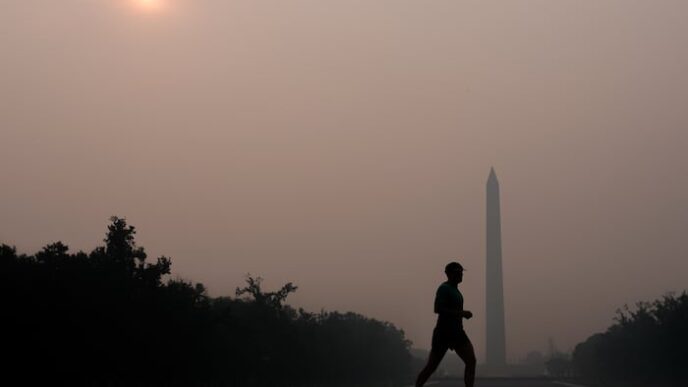
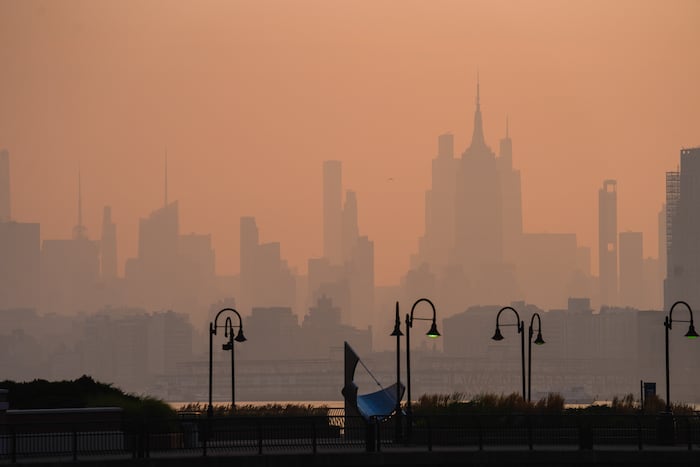
The New York and New Jersey metropolitan area has been shrouded in a dense, soupy haze that prompted air quality warnings across multiple states. However, weather experts are now confident that atmospheric conditions will dramatically improve before kickoff, offering spectators and players much better conditions for the biggest match in international football.
Meteorologists Predict Dramatic Air Quality Improvement
According to Tyler Roys, a senior meteorologist at AccuWeather, the storm front that passed through the region on July 18 will push most of the problematic smoke out of the Northeast corridor. While some residual haze may linger, the dangerous particulate matter that has been causing health concerns will largely dissipate before the final whistle blows at the renamed New York/New Jersey Stadium.
“In terms of the thickest smoke, the smoke that has really been eye-popping and leads to poor air quality, that is not expected across New York City or much of the Northeast,” Roys explained to reporters.
Jeff Berardelli, Chief Meteorologist and Climate Specialist at WFLA-TV in Tampa, Florida, offered an even more optimistic assessment. He described how the approaching storm front would effectively “sweep the atmosphere clean,” leaving behind only a faint trace of smoke that spectators might still detect but would pose no significant health risks.
Air Quality Index Shows Promising Trends
The air quality index readings paint an encouraging picture for World Cup attendees. Conditions are expected to improve from “unhealthy for sensitive groups” on July 18 to “moderate” air quality by the time Spain and Argentina take the field. This classification means minimal to no health risk for the general public attending the match.
Environmental monitoring at the stadium has been conducted with remarkable precision throughout the tournament. David Lu, CEO and co-founder of Clarity Movement, an environmental technology company providing air quality monitoring services for the event, confirmed that field measurements are taken every 10 minutes. Over the previous 48 hours, readings had fluctuated between unhealthy and very unhealthy levels, but Lu expressed confidence that significant improvement would occur within hours of the rainfall.
Key weather conditions expected for the World Cup final include:
- Temperatures around 80 degrees Fahrenheit (27 degrees Celsius)
- Light breezes providing comfortable conditions
- Low humidity levels ideal for athletic performance
- Moderate air quality safe for general spectators
- Minimal chance of precipitation during the match
Rob Shackelford, a meteorologist for The Weather Channel, advised that individuals particularly sensitive to particulate matter should still monitor air quality readings, especially during morning hours before the match. However, for the vast majority of fans, conditions will be suitable for outdoor enjoyment.
International Fans Remain Undeterred
Despite the challenging conditions earlier in the week, international supporters have shown remarkable dedication to experiencing the World Cup atmosphere firsthand. Dutch tourists Joost Timpers and his two sons exemplified this passion, cycling more than an hour from their hotel simply to photograph the stadium exterior, even without tickets to the final match.
The Spanish national team was forced to suspend its final outdoor training session on July 18 when a drenching thunderstorm triggered flash flood warnings in the area. However, this same weather system is precisely what meteorologists credit with improving conditions for the actual match.
Political Tensions Over Cross-Border Smoke
While weather conditions improve, political friction between the United States and Canada has intensified over the wildfire smoke situation. President Donald Trump, who announced plans to attend the cup final, threatened to impose tariffs in response to what he characterized as dangerous air pollution crossing the border. Ontario Premier Doug Ford sharply criticized these remarks as unacceptable and shortsighted.
Meteorologists predict that the heavier concentrations of smoke will shift toward the Midwest and Great Lakes regions by July 20, moving closer to the actual fire sources in Canada. This atmospheric pattern should ensure that the World Cup final proceeds under near-ideal conditions for both athletes and the millions of fans expected to fill the stands for this historic showdown between Spain and Argentina.