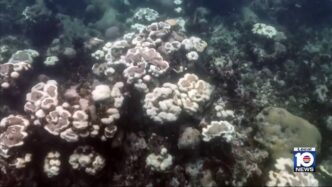
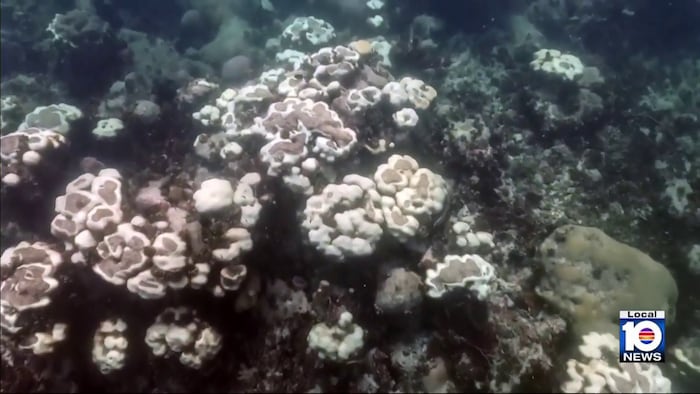
South Florida’s precious coral reefs are facing another devastating blow as summer temperatures push ocean waters into dangerous territory. The National Oceanic and Atmospheric Administration (NOAA) has raised urgent alerts as coral bleaching begins earlier than expected, threatening the already fragile marine ecosystem along the Florida Reef Tract.
Early Warning Signs at Cheeca Rocks
Scientists monitoring Cheeca Rocks, a historically resilient climate observation site in the Florida Keys, reported alarming conditions during the week of July 22, 2026. Ian Enochs, who leads NOAA’s coral program at their Miami laboratory, expressed deep concern about the accelerated timeline of this year’s bleaching event.
“These corals can’t move. They’re in incredibly warm water and this is all happening right now. We started to get some reports that there is some bleaching already happening now, this early on in July.”
The situation echoes the catastrophic events of July 2023, which marked the hottest July ever recorded on Earth and triggered the worst mass bleaching event in Florida’s history. During that crisis, scientists documented 100% bleaching rates at some sites, a phenomenon Enochs described as “absolutely crazy.”
Dangerous Temperature Trends
According to the Midwestern Regional Climate Center, South Florida has already experienced 38 consecutive days of triple-digit heat indices by late July 2026. These extreme atmospheric conditions are directly contributing to rising ocean temperatures that push corals beyond their survival thresholds.
The current stress levels at Cheeca Rocks have already exceeded those recorded during the 2023 disaster, raising fears that this summer could prove even more destructive for marine life. NOAA has progressively elevated its coral bleaching alert status for portions of the Florida Reef Tract as conditions continue to deteriorate.
- Coral bleaching occurs when water temperatures force corals to expel the symbiotic algae that provide their color and nutrients
- Prolonged bleaching leads to coral death and ecosystem collapse
- The Florida Reef Tract has lost over 90% of healthy coral cover in the past four decades
- Disease, pollution, and climate-driven bleaching are the primary causes of decline
Racing Against Time to Save Species
Despite the grim outlook, conservation organizations are mobilizing emergency responses to protect as many corals as possible. The Coral Restoration Foundation (CRF), recognized as the world’s largest coral restoration organization, has been preparing for another potential disaster since the traumatic events of 2023.
Phanor Montoya, CRF’s restoration program manager, emphasized the critical role that proactive intervention plays in species preservation. The organization maintains extensive coral nurseries and works tirelessly to outplant corals onto struggling reef systems throughout Florida.
“We’ve proven that restoration saves species. If it wasn’t because of restoration by CRF and others in Florida, we had already lost the staghorn and the elkhorn corals from Florida. Right now we have more corals in our nursery than we have on the reef.”
During the 2023 marine heat wave, CRF launched emergency rescue operations to relocate vulnerable coral specimens to cooler environments. Similar interventions may become necessary again as temperatures continue climbing throughout the summer months.
What This Means for South Florida
The implications of continued coral reef degradation extend far beyond environmental concerns. Florida’s reef system supports a multi-billion dollar tourism and fishing industry while providing natural storm protection for coastal communities. The loss of healthy coral cover affects everything from local employment to property values along the coastline.
Scientists hope that early detection of this year’s bleaching event will allow them to identify the most vulnerable reefs and intervene before damage becomes irreversible. Research teams continue surveying multiple sites along the reef tract, noting that while some areas show less severe symptoms than Cheeca Rocks, the overall trend remains deeply concerning.
NOAA researcher Tyler Christian noted that bleaching appears somewhat localized for now, but conditions at the worst-affected sites have deteriorated since initial surveys. The coming weeks will prove critical in determining whether this summer follows the devastating pattern of 2023 or whether intervention efforts can help mitigate the damage to South Florida’s irreplaceable coral ecosystems.