
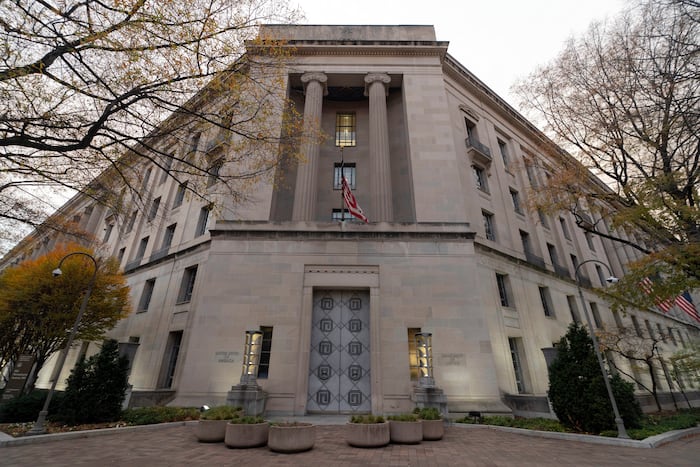
In an unprecedented legal move, the Justice Department has activated a secretive court that has remained dormant for three decades. On July 16, 2026, the Trump administration filed the first-ever petition to the Alien Terrorist Removal Court, seeking to deport an individual classified as an “alien terrorist” from United States soil.
The historic filing marks a significant escalation in the administration’s aggressive deportation strategy, bringing to life a legal mechanism that existed only on paper since its creation in 1996. The identity of the individual targeted for removal remains confidential, with only a single-page document posted on the court’s website acknowledging the case.
A 30-Year-Old Court Sees Its First Case
The Alien Terrorist Removal Court was established through the Antiterrorism and Effective Death Penalty Act of 1996. Despite being designed to handle national security deportation cases, the tribunal had never received a single petition until this past week. The court consists of five judges selected by Chief Justice John Roberts and operates under strict secrecy protocols.
According to records from the Federal Judicial Center, the court conducted no hearings and processed no applications throughout its entire existence prior to the July 16, 2026 filing. Legal experts have long wondered whether this judicial body would ever be utilized, and now that question has been definitively answered.
Judge Raises Concerns About Government’s Case
Chief Judge Joan Ericksen, a federal judge from Minnesota who leads the five-member tribunal, held a hearing on July 17, 2026, to examine the government’s petition. Her written response indicated significant concerns about the strength of the Justice Department’s arguments.
“The Court had questions about the nexus that the government alleges between the actions of the respondent and the specific sections and subsections it invokes with respect to those actions. The answers persuaded the Court that the Government could benefit from the opportunity for more thoughtful consideration.”
Judge Ericksen has directed the Justice Department to provide additional information by July 23, 2026, suggesting that federal prosecutors may need to strengthen their case before proceeding further.
What Qualifies Someone as an ‘Alien Terrorist’?
Under federal law, an individual may be classified as an “alien terrorist” based on several criteria. The legal definition encompasses a range of activities and associations that could trigger deportation proceedings through this specialized court.
- Having engaged in terrorist activity
- Endorsing or espousing terrorist activities
- Belonging to a political or social group that encourages terrorist activity
- Providing material support to terrorist organizations
- Planning or preparing for terrorist acts
Applications to the court must be approved by either the attorney general or deputy attorney general before being filed. If a petition is granted, the court is required to hold a public hearing where the government bears the burden of proving that the individual meets the definition of an “alien terrorist.”
Part of Broader Deportation Campaign
The activation of this dormant court represents another tool in the Trump administration’s extensive deportation efforts over the past year. The administration has employed various legal mechanisms to remove individuals from the country, including invoking the Alien Enemies Act of 1798, a wartime statute used to target Venezuelan migrants accused of belonging to terrorist gangs.
During a previous hearing related to the Alien Enemies Act case, Washington federal judge James Boasberg suggested that the Alien Terrorist Removal Court would be the appropriate venue for deportation cases involving national security concerns.
“In fact, Congress has an answer for us, doesn’t it? Because they created the Alien Terrorist Removal Court,” Judge Boasberg stated during that proceeding. “So if there’s a national security concern with having these hearings…you can always go to the ATRC, which would be a first, but that’s what it’s there for, right?”
What Happens Next
The Justice Department now faces a deadline to submit additional documentation supporting its case. Legal observers across the nation are watching closely as this untested legal process unfolds for the first time in American history. The outcome could set important precedents for how the government handles national security-related deportations in the future.
For Miami’s immigrant community, this development serves as a reminder of the expanding toolkit available to federal authorities pursuing deportations. The activation of a court that sat unused for 30 years demonstrates the administration’s willingness to explore every available legal avenue in its immigration enforcement efforts.