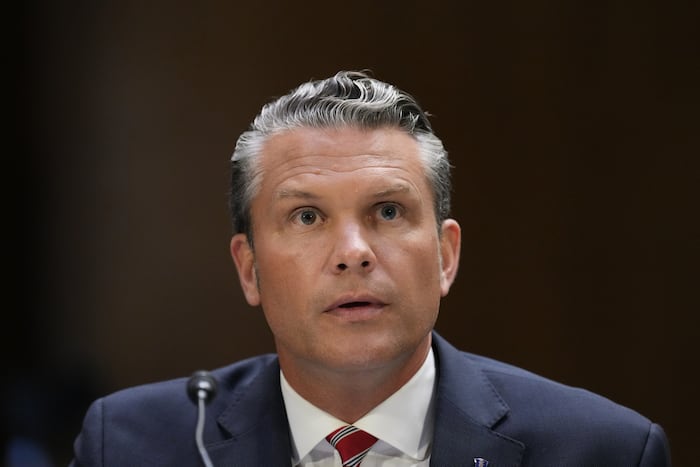
Defense Secretary Pete Hegseth found himself in the hot seat on July 21, 2026, as he faced intense questioning from lawmakers regarding the escalating costs of the United States military engagement with Iran. According to new estimates provided by Hegseth during a contentious Senate Appropriations Committee hearing, the conflict has already consumed approximately $37.5 billion in taxpayer funds, a figure that has risen substantially from previous assessments.
The hearing was marked by multiple interruptions from protesters as Hegseth attempted to deliver his opening remarks. The tensions came just days after the Pentagon announced that three additional American service members had lost their lives in the conflict, bringing the total death toll to 17 military personnel since operations began. Additionally, more than 100 service members have sustained injuries since early July 2026.
Republicans Push Massive Budget Package Amid Controversy
The Trump administration is seeking congressional approval for a sweeping $95 billion GOP budget package that would provide substantial funding for military operations and other White House priorities. The proposed supplemental funding includes $70 billion specifically designated for war operations, along with $60 billion for additional military needs and $12 billion for other national security requirements.
“Without these funds, we face critical shortfalls,” Hegseth testified before the committee, emphasizing what he described as an “urgent, necessary” injection of money into the defense apparatus.
The budget package also contains provisions that extend beyond military spending, including:
- $10 billion allocated for farm aid to assist agricultural producers struggling under current tariff policies
- $10 billion designated for voting law changes, which are expected to include new identification requirements
- $60 billion for general military funding
- $12 billion for additional national security needs
The White House issued a statement ahead of the hearing urging lawmakers to approve the budget resolution “without modification—immediately.” This marks the last major priority package Republicans hope to advance before Congress recesses for the upcoming midterm election campaigns.
Democrats Sound Alarm Over Prolonged Military Engagement
Senator Patty Murray, the ranking Democrat on the Appropriations Committee, delivered a sharp rebuke of the administration’s handling of the conflict, warning of the dangers of “another forever war.” Her concerns reflect growing unease among opposition lawmakers about the trajectory of American military involvement in the region.
Murray pointed out the disconnect between the administration’s optimistic rhetoric and the reality on the ground. According to the senator, President Donald Trump has claimed more than 40 times that a diplomatic deal is imminent and that the war will conclude soon. Yet simultaneously, the administration is requesting an additional $70 billion in war funding while asking Congress to simply trust that everything will work out.
Public opinion appears to be shifting against the administration’s approach to the conflict. Recent polling from AP-NORC indicates that most Americans disapprove of how President Trump is handling the situation with Iran. The war has produced tangible economic consequences for everyday Americans, with gas prices spiking as Iran works to control oil shipments through the strategically critical Strait of Hormuz.
Pentagon Leadership Faces Multiple Challenges
Beyond questions about war funding and strategy, Hegseth faced scrutiny regarding his leadership of the Department of Defense. Senator Susan Collins, the Republican chair of the committee, expressed serious concerns about reports that the Pentagon has blocked or denied promotions to various officers, particularly women and minorities.
Collins described these personnel decisions as “deeply troubling” and warned of potential long-term consequences for military recruitment and retention. She emphasized that such policies could discourage qualified women and individuals from diverse backgrounds from pursuing military careers, ultimately depriving the armed forces of valuable talent, dedication, and patriotism.
Senator Jeanne Shaheen of New Hampshire raised another pointed question about fiscal management, noting that the department has yet to spend approximately half of the $150 billion that Republicans provided to the Pentagon in last year’s major budget legislation. This leaves roughly $75 billion in unspent funds, raising questions about why additional appropriations are being requested.
General Dan Caine, chairman of the Joint Chiefs of Staff, and Agriculture Secretary Brooke Rollins also appeared before the committee as part of the budget deliberations. House Speaker Mike Johnson, speaking at his weekly press conference on the same day, defended the administration’s approach, stating that the commander in chief and the Department of War are working diligently to bring the conflict to a resolution.
President Trump took to social media at the beginning of the week to rally support among House Republicans for the budget resolution. However, critics note that the administration appears to have shifted away from campaign promises not to draw the United States into prolonged military conflicts abroad. Meanwhile, reports indicate that American munitions stockpiles are running low due to the intensity of ongoing missile strikes.