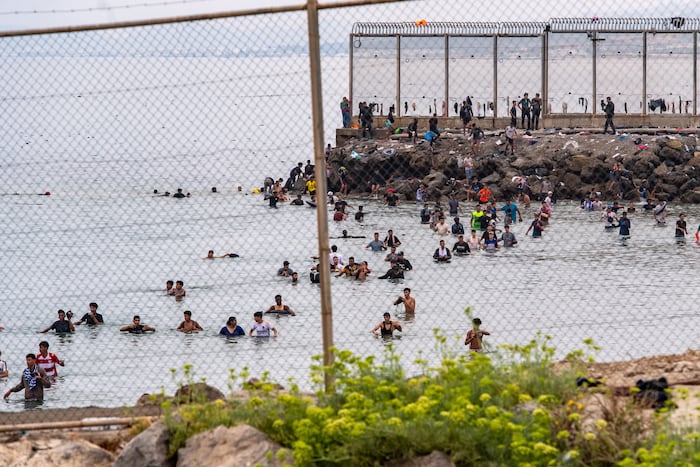
The Ceuta migration crisis of early August 2026 has become one of the most dramatic border events in recent European history, with approximately 72,000 people attempting to reach Spanish territory in just a few days. What triggered this massive human movement? Viral posts on Instagram, Facebook, and TikTok falsely suggesting that Spain’s border with Morocco was suddenly open to migrants.
For Miami’s Latin community, this story resonates deeply. The desperate search for better opportunities, the power of social media misinformation, and the human cost of migration are themes that connect communities across borders. Understanding what happened in Ceuta offers important lessons about the dangers of online rumors and the realities of modern migration.
How Social Media Rumors Sparked the Ceuta Migration Crisis
The chaos began with seemingly innocent Instagram posts claiming that Spain’s border with Morocco was opening up. An account called Haraga Ceuta posted videos suggesting easy passage into Europe. The term “haraga” refers to young migrants who destroy their identification papers while attempting illegal crossings into European territory.
The misinformation spread rapidly across multiple platforms:
- Instagram accounts shared videos claiming the border was open
- Facebook groups tracked coast guard patrol schedules
- TikTok videos mapped exact swimming routes around border breakwaters
- Users shared screenshots from vessel-tracking platforms
- Some accounts advertised wetsuits and inflatable boats for sale
Within hours, young Moroccans from cities as far as Larache, about 93 miles from Ceuta, began making their way toward the Spanish territory. Buses filled up, regional trains became packed, and taxis carried hopeful migrants toward what they believed was an open door to Europe.
The Tragic Human Cost at the Border
The Ceuta migration crisis quickly turned deadly as masses of people converged on a narrow concrete breakwater. The scene became chaotic as migrants attempted to climb onto land simultaneously, pushing and climbing over one another on slick rocks.
“I stepped on the face of a dead man while I was climbing out. I hope God forgives me and all those whose bodies were found,” said Lahcen Kalouch, a Moroccan migrant who reached Ceuta before returning home.
The official death toll reached devastating numbers:
- 72 people died on the Spanish side of the border
- 11 people died on the Moroccan side
- Deaths included drowning victims and stampede casualties
- Many were young people seeking economic opportunities
Seventeen-year-old Omar Danbor from Fnideq walked back exhausted along the coast after his failed attempt. “I saw online that the border was open, and I decided to go,” he explained, illustrating how social media convinced thousands of young people to risk everything.
Misunderstanding Spain’s Immigration Policies
Part of the Ceuta migration crisis stemmed from genuine confusion about recent Spanish legal developments. Prime Minister Pedro Sánchez had announced immigration regularization measures, which some migrants misinterpreted as an open invitation.
However, these measures were specifically designed for:
- People already living in Spain before January 1, 2026
- Individuals who entered Spain legally but overstayed visas
- Primarily migrants from Latin America with established residency
A court ruling limiting authorities’ ability to immediately return migrants who swim into Ceuta added to the confusion. This legal nuance was misrepresented on social media as evidence that entering Ceuta would guarantee asylum or residency rights.
European Union Response and Investigation
The Ceuta migration crisis touched a significant political nerve across Europe. The European Union launched an investigation into what triggered the mass movement and expressed concern about online disinformation campaigns.
On August 4, 2026, the EU’s migration commissioner addressed the situation, highlighting concerns about coordinated misinformation but stopping short of identifying specific culprits behind the viral posts. Many of the social media accounts that spread the false information were deleted shortly after the crossings began, making investigation difficult.
The Associated Press attempted to contact several accounts responsible for spreading the rumors but received no responses. The identity of whoever orchestrated the misinformation campaign remains unknown.
What This Means for Global Migration Patterns
For communities watching from Miami and across the Americas, the Ceuta migration crisis serves as a powerful reminder of how social media can influence human behavior on a massive scale. The desperation that drove 72,000 people toward a border based on Instagram posts reflects the intense pressure many feel to find better lives abroad.
Nearly all surviving migrants eventually returned to Morocco, either expelled by authorities or departing voluntarily due to lack of shelter, food, and water in Ceuta. The fallout from this crisis will shape European migration policy and social media regulation for years to come.
The tragedy also highlights the need for accurate information about immigration policies and legal pathways. Whether in Europe, the United States, or elsewhere, understanding actual immigration rules rather than relying on social media rumors can literally save lives. For Miami’s diverse community with ties across Latin America and beyond, these lessons about misinformation and migration hit close to home.