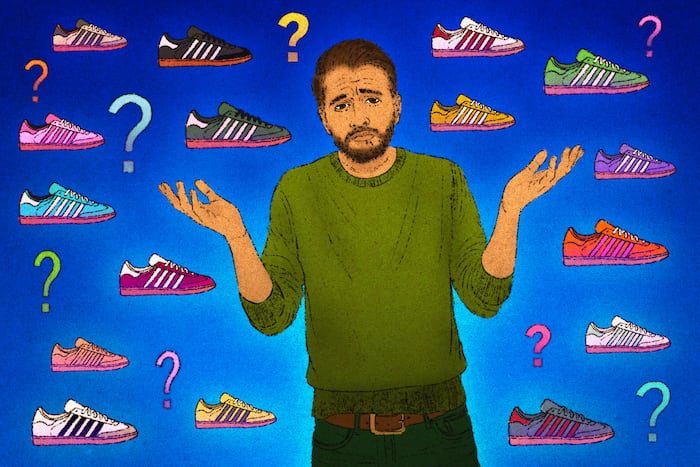
In a world that celebrates endless possibilities, from streaming platforms with thousands of shows to dating apps with millions of potential matches, the promise of finding the perfect option seems within reach. However, behavioral scientists are now warning that this abundance of choices may actually be working against us, causing more stress, anxiety, and dissatisfaction than ever before.
The Hidden Cost of Unlimited Options
The belief that more choices equal greater happiness is deeply embedded in American culture. Yet research consistently demonstrates the opposite effect. Barry Schwartz, an emeritus psychology professor at Swarthmore University and author of “The Paradox of Choice,” has spent years studying this phenomenon.
“There have been hundreds of studies showing that there can be too much of a good thing. Instead of being liberated by all this choice, you’re paralyzed. You can do anything, and you can’t figure out which of those many things to do.”
Schwartz’s recommendation is straightforward: reduce the number of decisions you make throughout the day, and your cognitive well-being will improve significantly. This applies to everything from what you wear in the morning to major life decisions.
Real-World Evidence Shows Less Is More
The impact of excessive choice has been documented across various settings, from healthcare to retirement planning. Studies have revealed surprising patterns that challenge conventional wisdom about options and satisfaction:
- Residents in states with more Medicare Part D prescription drug plan options were actually less likely to choose any plan at all
- Companies offering more 401(k) investment options saw lower employee enrollment rates, even when employers offered matching contributions
- Shoppers at gourmet grocery stores purchased more artisanal jam when presented with six flavors compared to 24 varieties
- Students were more likely to complete extra-credit assignments when given six topic options instead of 30
These findings reveal a consistent pattern: when faced with too many possibilities, people often become overwhelmed and either make no decision at all or feel less satisfied with whatever they ultimately choose.
Understanding Your Brain’s Resistance to Decisions
Daniel Willingham, a psychology professor and neuroscience researcher at the University of Virginia, explains that this phenomenon has deep evolutionary roots. The human brain is essentially designed to conserve energy by avoiding unnecessary thinking whenever possible.
Problem-solving requires significantly more mental energy than relying on memory and established patterns. When confronted with a challenge, the mind first searches for solutions that have worked previously. The analytical, problem-solving regions of the brain only activate when no familiar solution exists.
“Another way to put it is that if you’re thinking, things are not going well,” Willingham noted. This explains why people often operate on autopilot throughout their daily routines, taking the same route to work or ordering the same coffee without conscious deliberation.
The Maximizer’s Burden in the Social Media Era
The satisfaction problem becomes particularly acute for individuals psychologists classify as “maximizers” — those who constantly strive to make the absolute best choice possible. For these individuals, the proliferation of options creates an exhausting cycle of comparison and second-guessing.
“People who are maximizers especially suffer from the proliferation of options. Only the best will do,” Schwartz explained. The challenge intensifies in the age of social media, where people can easily compare their choices to those of friends, influencers, and strangers.
When limited options existed, expectations remained modest. Nobody expected their jeans to fit perfectly when choosing between just a few brands. However, with thousands of options available, the expectation of finding the ideal choice becomes both a possibility and a burden.
Practical Strategies for Decision Fatigue
Experts suggest several approaches to combat the negative effects of choice overload:
- Establish routines for everyday decisions like meals, clothing, and commuting routes
- Set clear criteria before shopping to narrow options quickly
- Accept “good enough” rather than seeking perfection for minor decisions
- Limit the time spent researching low-stakes choices
- Recognize that the anxiety of choosing often exceeds the actual importance of the decision
The key insight is understanding that not every decision deserves extensive deliberation. Car enthusiasts may enjoy exploring unlimited options when purchasing a vehicle, but that same approach to buying groceries creates unnecessary mental strain. By strategically limiting choices where they matter least, individuals can preserve mental energy for decisions that truly impact their lives.