



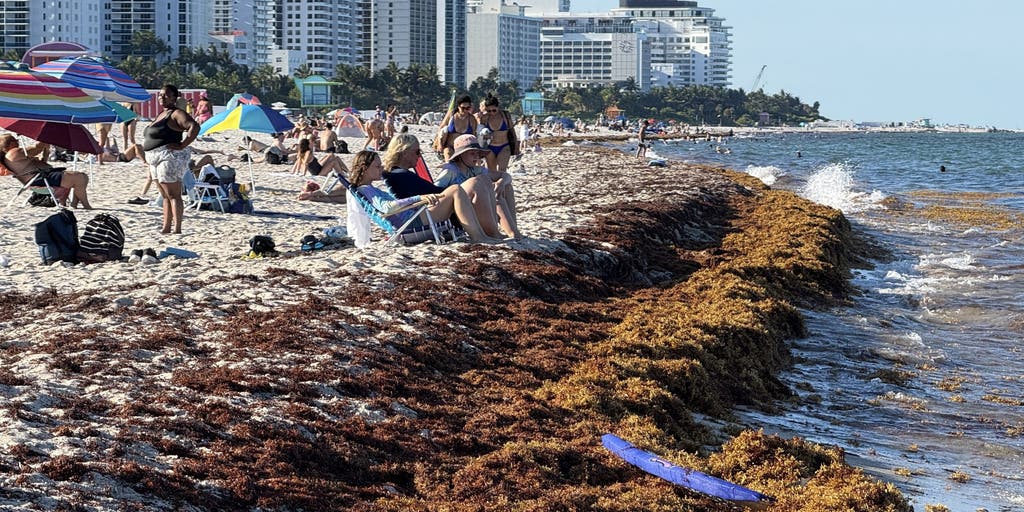
Miami Beach officials are taking urgent action as a heavy Miami Beach sargassum bloom washes ashore, prompting concerns among residents, tourists, and local business owners. The massive influx of brown seaweed has transformed stretches of pristine coastline into pungent, algae-covered beaches.
City authorities announced expanded cleanup operations this week to address the growing accumulation of sargassum seaweed along popular tourist destinations. The response comes as South Florida braces for what experts predict could be one of the most significant seaweed seasons in recent memory.
What Is Sargassum and Why Is It Affecting Miami Beach?
Sargassum is a type of brown macroalgae that floats in large masses across the Atlantic Ocean. While it serves as an important habitat for marine life in open waters, excessive amounts washing ashore create significant challenges for coastal communities.
The seaweed originates from the Sargasso Sea and the expanding Great Atlantic Sargassum Belt, which has grown dramatically over the past decade. Scientists attribute the increase to rising ocean temperatures, nutrient pollution from agricultural runoff, and changing ocean currents.
When sargassum decomposes on beaches, it releases hydrogen sulfide gas, producing a distinctive rotten-egg smell that can deter visitors and pose health concerns for individuals with respiratory conditions.
Miami Beach Officials Announce Comprehensive Response Plan
City administrators have deployed additional resources to combat the current seaweed invasion affecting South Florida beaches. The response includes expanded mechanical removal operations, increased staffing for beach maintenance crews, and coordination with county environmental agencies.
Enhanced Cleanup Operations
Miami Beach has mobilized specialized equipment to remove sargassum before decomposition accelerates. Tractors equipped with raking attachments work along affected shorelines during early morning hours to minimize disruption to beachgoers.
Officials report that crews are removing several tons of seaweed daily from priority areas, including South Beach, Mid-Beach, and North Beach zones. The city has also extended cleanup hours to address the continuous arrival of fresh sargassum carried by tides and currents.
Budget Allocation and Resources
The municipality has allocated emergency funds to support the intensified cleanup efforts. Beach maintenance typically represents a significant portion of Miami Beach’s annual budget, but officials acknowledge that severe sargassum seasons require supplemental spending.
City representatives stated during recent public briefings that they are committed to maintaining beaches as world-class destinations. Authorities emphasized that protecting both the tourism industry and residents’ quality of life remains a top priority.
Environmental and Economic Impact of Sargassum Accumulation
The Florida sargassum problem extends beyond aesthetic concerns, creating measurable environmental and economic consequences for affected communities.
Effects on Marine Ecosystems
While floating sargassum provides shelter for juvenile fish, sea turtles, and other marine species, excessive accumulation along shorelines can harm coastal ecosystems. Thick mats of decomposing seaweed deplete oxygen levels in shallow waters, potentially causing fish kills and damaging seagrass beds.
Sea turtle nesting season coincides with peak sargassum arrival, creating additional challenges. Heavy seaweed coverage can obstruct nesting females and trap hatchlings attempting to reach the ocean.
Tourism and Business Concerns
Miami Beach’s economy depends heavily on its reputation as a premier beach destination. Local businesses, including hotels, restaurants, and recreational operators, report concerns about potential revenue impacts during heavy sargassum seasons.
The tourism industry generates billions of dollars annually for the Greater Miami area. Even short-term beach closures or negative publicity can influence visitor decisions and booking patterns. Industry stakeholders continue monitoring conditions while supporting city cleanup initiatives.
Health Considerations for Residents and Visitors
Public health officials have issued guidance regarding sargassum exposure during the current bloom event. While the seaweed itself is not toxic, decomposing masses release gases that can irritate eyes, skin, and respiratory systems.
Individuals with asthma, allergies, or other respiratory conditions should exercise caution when visiting heavily affected beach areas. Officials recommend:
- Avoiding prolonged exposure near large decomposing piles
- Staying hydrated and seeking shade during cleanup operations
- Reporting excessive accumulations to city maintenance departments
- Following posted advisories at beach access points
Children and elderly individuals may experience heightened sensitivity to hydrogen sulfide emissions. Beach visitors should relocate to cleaner sections if odors become overwhelming.
Long-Term Solutions and Scientific Research
Researchers across Florida and the Caribbean are investigating sustainable approaches to sargassum management that could benefit coastal communities facing recurring challenges.
Innovative Uses for Collected Seaweed
Scientists are exploring commercial applications for harvested sargassum, including agricultural fertilizer, biofuel production, and construction materials. Converting the nuisance seaweed into valuable products could offset cleanup costs while reducing landfill disposal.
Several pilot programs in Mexico and the Caribbean have demonstrated promising results, though scaling these solutions remains challenging.
Predictive Monitoring Systems
Satellite imagery and ocean current modeling now enable earlier detection of approaching sargassum masses. These forecasting tools help municipalities prepare resources and inform the public about anticipated conditions.
Florida environmental agencies collaborate with federal partners to improve seaweed tracking capabilities and develop regional response protocols. Enhanced prediction accuracy allows for more efficient resource allocation during peak seasons.
The current Miami Beach sargassum bloom highlights ongoing challenges facing South Florida’s coastal communities as seaweed seasons intensify. City officials have mobilized significant resources to protect beaches and maintain the region’s appeal to residents and visitors alike.
While cleanup efforts continue, scientists and policymakers work toward long-term solutions that balance environmental stewardship with economic realities. Beachgoers should stay informed about current conditions and follow official guidance when planning coastal activities.