On July 27, 2026, global markets delivered a breath of fresh air for consumers worldwide, including Miami’s vibrant Latin community. Oil prices plunged nearly 7% as tensions between the United States and Iran showed signs of easing, while Asian stock markets celebrated impressive gains. For Miami residents watching their household budgets closely, this shift in global oil prices could signal welcome relief at the gas pump in the coming weeks.
Understanding the Global Oil Price Drop
The dramatic decline in oil prices came as the U.S. and Iran stepped back from escalating conflicts and began discussing a potential interim ceasefire deal. Brent crude, the international benchmark, dropped 6.8% to $85.49 per barrel, while U.S. benchmark crude fell 7% to $83.06 per barrel. This represents a significant shift from the tension-filled weeks that preceded this development.
“Oil’s sharp retreat at the Monday open did more than knock a few dollars off the barrel. It loosened the geopolitical knot that had been tightening around equities, currencies, bonds and central banks for most of July,” explained Stephen Innes of SPI Asset Management.
For Miami families filling up their tanks for weekend beach trips to South Beach or driving to family gatherings in Hialeah, this global oil price movement matters deeply. Currently, a gallon of gasoline costs $4.11 nationally, according to AAA. While this remains nearly a dollar higher than the same period last year, the recent drop in crude prices could help stabilize or even reduce costs at local gas stations.
Asian Markets Celebrate Historic Gains
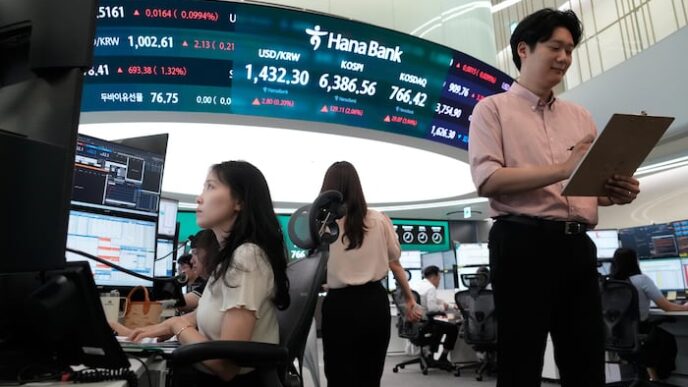
Across the Pacific, Asian markets responded enthusiastically to the easing tensions. The story of the day was Chinese memory chipmaker CXMT, whose shares soared an astonishing 466% during its Shanghai trading debut. The company instantly became China’s most valuable listed company, with an estimated market capitalization of 3.3 trillion yuan, equivalent to nearly $490 billion.
Other Asian markets followed suit with impressive performances:
- Japan’s Nikkei 225 rose 0.5% to 64,931.19
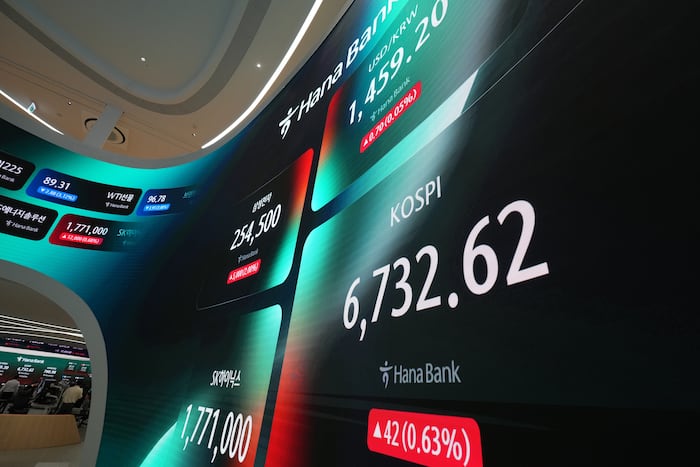
- South Korea’s Kospi advanced 1% to 6,755.75
- Hong Kong’s Hang Seng climbed 1% to 25,207.18
- Shanghai Composite gained 1.2% to 3,858.25
- Australia’s S&P/ASX 200 surged 1.4% to 8,894.00
- India’s Sensex added 1.1%
European markets also joined the rally, with Germany’s DAX gaining 1.6% and Britain’s FTSE 100 rising 0.5%. U.S. futures for the S&P 500 and Dow Jones Industrial Average were both up 1% in early trading.
What This Means for Miami’s Economy
Miami’s Latin community, known for its entrepreneurial spirit and strong family connections across the Americas, watches these global economic shifts with particular interest. Lower oil prices can translate into reduced shipping costs for businesses importing goods from Latin America, more affordable travel for families visiting relatives abroad, and generally more breathing room in household budgets.
However, challenges remain on the horizon. The Federal Reserve meets this week amid rising inflation concerns, partly driven by recent tariff announcements from the Trump administration. Wall Street analysts are increasingly discussing the possibility of an interest rate hike rather than the cuts many had hoped for earlier in the year.
Energy Costs and Daily Life
Higher energy costs have been consuming a larger share of household budgets throughout 2026, forcing families to prioritize basic needs like gasoline over discretionary spending. For Miami’s restaurant scene, nightlife, and retail businesses that thrive on consumer spending, any relief in energy costs could help boost foot traffic and sales.
As Innes noted, oil acts as “the fastest-moving tax in the global economy.” When crude prices rise sharply, the effects ripple through everything from fuel pumps to airline tickets, manufacturing costs to food prices. The reverse is also true, meaning this week’s decline could bring positive effects across multiple sectors.
Looking Ahead: Investment and Opportunities
For Miami investors and business owners, the current market environment presents both opportunities and reasons for caution. The technology sector continues to attract significant attention, particularly around artificial intelligence investments. Tech giants like Alphabet and Nvidia have been spending heavily to expand AI capacity, though investors are increasingly questioning whether these companies can generate profits to justify their massive valuations.
Whether you are managing a family budget, running a small business in Little Havana, or planning investments for the future, staying informed about these global oil price movements and market trends can help you make smarter financial decisions. The interconnected nature of today’s global economy means that events in Shanghai, Tehran, or Washington can directly impact life in Miami’s diverse neighborhoods.