
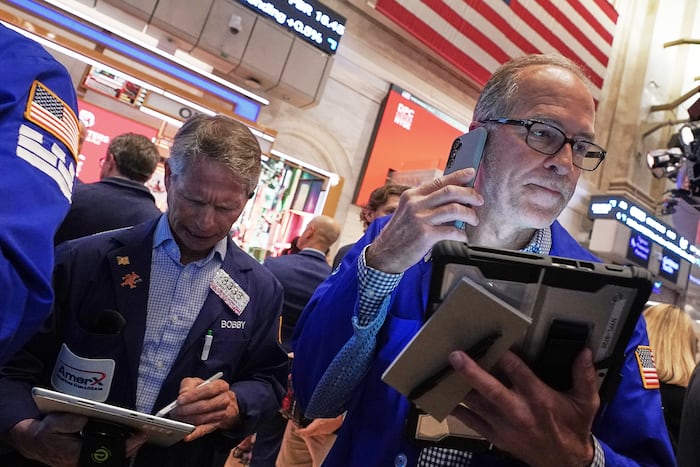
Wall Street experienced significant turbulence on July 17, 2026, as artificial intelligence-related stocks continued their volatile trajectory, dragging major indexes lower while escalating military tensions with Iran sent oil prices soaring to concerning levels.
The S&P 500 declined 0.5% after experiencing a morning plunge of as much as 1.4%. This downturn positions the index for its first losing week in three, a notable reversal coming just days after it approached within 0.5% of its all-time high. The Dow Jones Industrial Average shed 149 points, representing a 0.3% decrease, while the Nasdaq composite fell 0.7%.
Technology Sector Bears the Brunt of Market Pressure
Semiconductor stocks found themselves once again at the epicenter of market instability. These companies have faced mounting pressure for weeks as investors question whether their valuations have become overextended and whether the insatiable demand for computer memory and processors can be sustained if AI fails to deliver the promised profitability and productivity gains.
The volatility extended far beyond American shores, creating a ripple effect across global markets:
- Taipei’s index tumbled 6.5% in a dramatic sell-off
- Tokyo markets dropped 4% as Asian investors fled tech positions
- Shanghai experienced a 3% decline
- Taiwan Semiconductor Manufacturing Co. plummeted 7.3%
- Applied Materials sank 2.6%, though maintaining a substantial 112% gain for the year
South Korea’s stock market remained closed for a holiday, providing temporary relief for a market that has been at the center of AI-related turbulence. The Korean market is heavily dominated by tech giants Samsung Electronics and SK Hynix. During the week of July 17, 2026, Seoul’s Kospi index experienced extreme swings, including one session with a 6.2% surge followed by days with declines of 6.4% and 8.9%.
Chinese AI Rival Adds to Market Uncertainty
News emerged of a new Chinese open-source AI model developed by startup Moonshot, called Kimi K3, which further rattled investor confidence. This development echoes the market disruption caused when China’s DeepSeek announced its AI model in early 2025.
“Another low-cost rival to big Western AI models like ChatGPT and OpenAI could potentially hurt demand for computer chips and other components,” market analysts noted, highlighting the competitive threat from Chinese innovation.
European stock indexes, with their relatively lighter emphasis on AI and technology sectors, experienced more modest movements compared to their Asian and American counterparts.
Corporate Earnings Present Mixed Picture
Several major companies saw their stock prices decline following quarterly earnings reports, departing from the positive trend earlier in the week when financial giants like Goldman Sachs and BlackRock rallied on better-than-expected spring profits.
Notable earnings-related movements included:
- Netflix dropped 6.8% despite exceeding profit expectations, as revenue fell short of analyst projections
- Intuitive Surgical, the robotic surgical systems manufacturer, plunged 12.6% amid concerns about slowing procedure growth
- SpaceX fell 4.1%, touching its lowest level since beginning Nasdaq trading just over a month prior
The SpaceX decline came as the company faced challenges on multiple fronts, including an aborted test flight of its massive Starship rocket on July 16, 2026, which was halted within a second of launch.
Geopolitical Tensions Drive Oil Prices Higher
Escalating military action in the Middle East added another layer of pressure to already nervous markets. The United States expanded its airstrike campaign against Iran early on July 17, 2026, targeting additional bridges and collapsing a tower at a key Iranian port.
Brent crude, the international oil benchmark, surged 3.9% to reach $87.48 per barrel, marking a significant increase from approximately $76 just one week earlier. These strikes have intensified concerns about potential disruptions to oil tankers navigating the Strait of Hormuz, a critical passage for crude shipments from the Persian Gulf to global customers.
The rising oil prices have pushed Treasury yields higher in the bond market, creating conditions that threaten to slow economic growth and pressure stock valuations. Higher yields have already driven the average 30-year mortgage rate to its highest level in nearly a year, affecting homebuyers nationwide. However, Treasury yields showed some easing on July 17, 2026, with the 10-year Treasury yield declining to 4.54%.
For Miami’s business community and investors, these developments signal a period of heightened market volatility that requires careful attention to both technological disruptions and geopolitical risks affecting global energy markets.