The world’s leading authority on food security announced on July 23, 2026, that famine conditions in Gaza have officially ended, marking a significant improvement from the devastating hunger crisis declared in parts of the Palestinian territory last year. However, experts are warning that the situation remains precarious, with most families still struggling to access adequate nutrition.
Conditions Improve But Crisis Persists
The Integrated Food Security Phase Classification (IPC), the global standard for measuring food insecurity that the United Nations and humanitarian organizations rely upon, released findings covering the April through June period. The report indicates that reduced military operations and increased humanitarian aid deliveries from Israel have contributed to measurable improvements across the territory.
Despite these gains, the assessment paints a sobering picture of daily life for Gaza’s 2.1 million Palestinian residents. All five governorates in the territory are now classified under Phase 3 “crisis” conditions, with an estimated 200,000 people still experiencing the more severe Phase 4 “emergency” classification.
“Even small disruptions to humanitarian access could rapidly reverse recent gains,” the IPC report warned, highlighting the fragile nature of the current situation.
Humanitarian Challenges Continue on the Ground
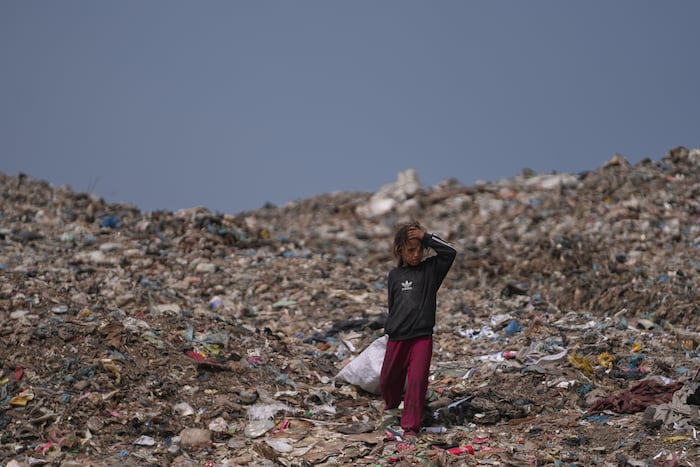
Life in Gaza remains extraordinarily difficult for displaced families who depend on charitable organizations for survival. Israel’s military controls more than half of the territory, leaving Palestinians crowded into temporary tent encampments and severely damaged urban areas. Failing infrastructure, particularly sewage systems, has led to recurring disease outbreaks and inconsistent access to basic services including clean water.
Displaced mother Rana Abu Bakr, who relies on a charity kitchen in Khan Younis to feed her family each day, described the ongoing hardship in stark terms. She explained that beyond the daily meal from the charity, her family faces severe shortages of water, food, and other essentials, with prices remaining impossibly high for most residents.
Children Face Long-Term Health Consequences
The prolonged food crisis has taken a particularly devastating toll on Gaza’s youngest residents. The IPC report documented a concerning increase in cases of stunting among children, a condition where chronic malnutrition impairs physical growth and causes irreversible lifelong health consequences.
UNICEF Executive Director Catherine Russell issued a statement expressing deep concern about the situation affecting children:
“Many children are still going hungry, and some children may never fully recover from prolonged lack of proper nutrition.”
The humanitarian situation has been compounded by ongoing violence. According to Gaza’s health ministry, Israeli military operations have resulted in more than 1,185 deaths since the ceasefire agreement reached in October of the previous year.
Key Findings from the Food Security Assessment
The IPC assessment revealed several important developments regarding the food situation in Gaza:
- Famine conditions that were declared in Gaza Governorate (covering Gaza City) in August of last year have been downgraded
- All five governorates now fall under Phase 3 “crisis” classification
- Over 200,000 residents remain in Phase 4 “emergency” conditions
- Acute malnutrition rates have declined to “acceptable” levels according to international standards
- Acute food insecurity remains at crisis levels throughout the territory
Dispute Over Humanitarian Data
Israeli authorities have consistently disputed assessments of widespread hunger in Gaza, characterizing allegations of manmade famine as inaccurate. After implementing a near-total blockade on humanitarian aid from early March through mid-May of the previous year, Israel subsequently increased the volume of assistance entering the territory.
The Israeli military body responsible for coordinating humanitarian affairs in Gaza, known as COGAT, rejected the IPC’s latest findings. Officials argued that the assessment failed to account for Israeli data indicating that aid truck deliveries were reaching nearly three times the required amount, based on benchmarks Israel calculated using World Food Program standards.
Despite these competing claims, humanitarian organizations on the ground continue to report that charity kitchen lines remain long and food prices in local markets stay elevated far beyond what most families can afford, according to information from Palestinian residents and economic data from the Gaza Chamber of Commerce.