

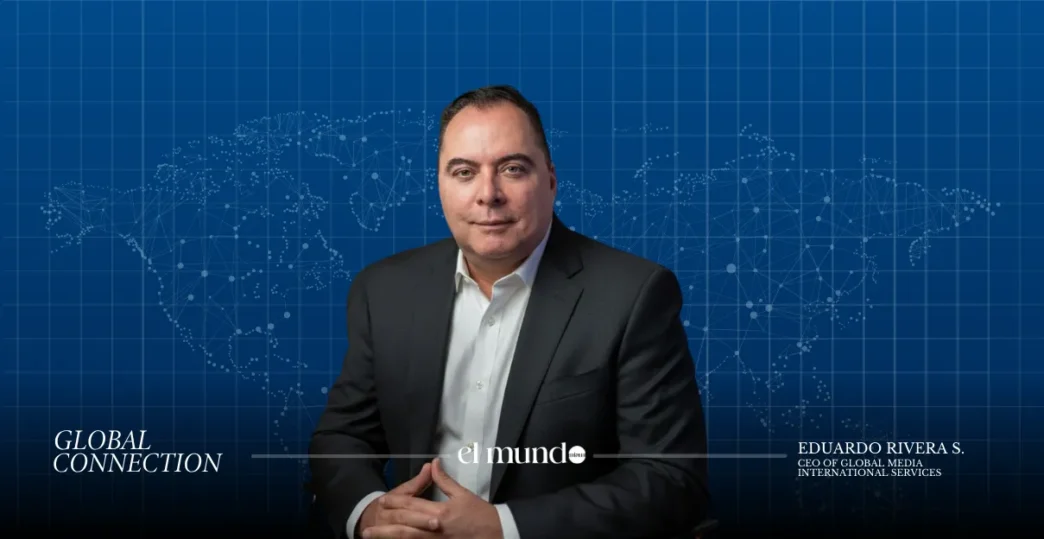
I am writing these lines as the calendar approaches 2026, and as a businessman, I have no room for complacency. The country is entering a complex year, with two open fronts that leave no room for improvisation: the Economic Package and the review of the USMCA. Added to this are important political decisions that, whether we like it or not, will have costs, such as sending Mexican oil to Cuba.
Let’s analyze each point separately. At the first side, there is the Economic Package, which is not just another technical document, but rather defines the framework under which those of us who invest, produce, and generate employment will operate. If the fiscal message is confusing or conveys a lack of seriousness about spending, capital will retreat. Not because of ideology, but out of prudence. Businesspeople plan with numbers, not speeches. In 2026, with limited growth and fragile consumption, any sign of indiscipline weighs more heavily than usual. There is no room here for miscalculations or narratives that minimize obvious risks.
The second front is the review of the USMCA. This is not a mere formality. It is a political and economic assessment of Mexico’s behavior vis-à-vis its partners, and the United States and Canada are closely scrutinizing every decision that could be interpreted as a lack of strategic alignment. It is in this context that the shipment of 80,000 barrels of oil to Cuba appears. President Claudia Sheinbaum has been clear in stating that this is a sovereign decision, in line with what she calls Mexican humanism. That explanation may work domestically, but in Washington, the interpretation is different.
Several Republican congressmen have already expressed their disagreement and warned of possible consequences. They are not doing so out of altruism, but rather out of political calculation. For them, Cuba remains a sensitive issue, and any energetic support from Mexico is interpreted as a provocation. It would be naive to ignore this fact. In trade negotiations, gestures carry as much weight as the text. And when reviewing a treaty that underpins a large part of our exports, every gesture counts.
What does this mean for citizens? Uncertainty. Foreign policy decisions are not abstract. If relations with the United States become tense, the impact is felt in production chains, employment, and the exchange rate. For businesspeople, the message is even more direct: planning costs rise and predictability declines. No one invests enthusiastically when they perceive unnecessary friction with their main trading partner.
I am not writing this from an ideological standpoint, but rather from the experience of someone who has seen projects stalled by misguided signals. Sovereignty is not up for debate, but neither is responsibility. Governing involves weighing consequences. In 2026, Mexico needs a cool head, fiscal clarity, and a functional relationship with its trading partners. Anything else is rhetoric that does not pay salaries or open markets.
As businesspeople and citizens, it is up to us to prepare ourselves. We must adjust expectations, take care of liquidity, and demand seriousness. The country has productive capacity and talent, but that is not enough if political decisions generate unnecessary noise. Next year will test the economic maturity of the government and the resilience of the private sector. And, as always, the cost of mistakes is not paid by those who make decisions from positions of power, but by those who risk their capital and their work every day.