

The U.S. Army began reducing the deployment of its military fleet in the Caribbean following the January 3 operation in which U.S. forces captured Venezuelan President Nicolás Maduro, The New York Times reported. As part of this adjustment, two amphibious transport ships were moved to waters north of Cuba, marking a significant reduction in the military contingent in the region.
According to the U.S. newspaper, senior officials confirmed that the withdrawal had begun even tho President Donald Trump had assured that he would keep ships deployed in the Caribbean, citing the need to continue anti-drug and regional security operations.
U.S. ships are repositioning near Cuba
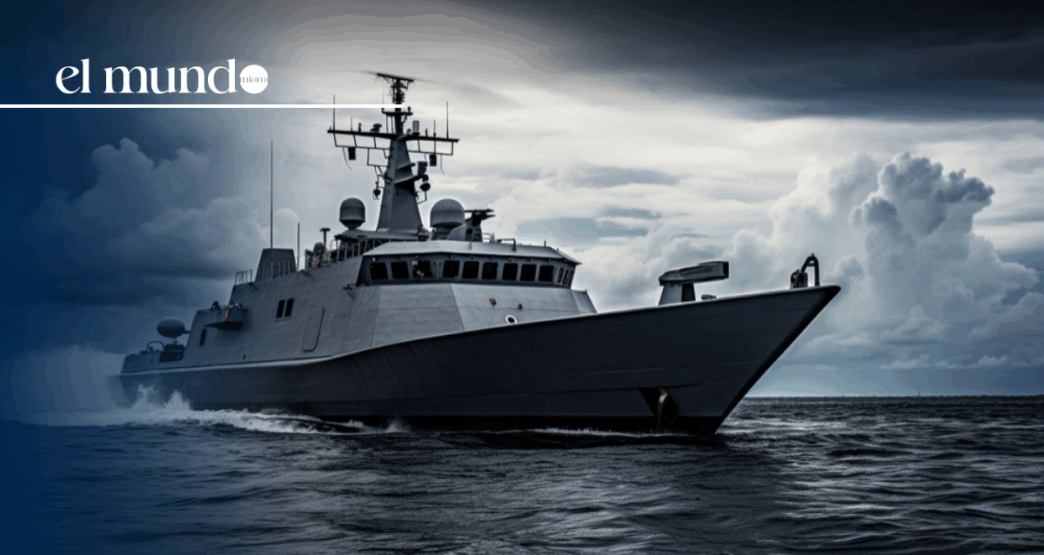
The ships USS Iwo Jima and USS San Antonio, designed for amphibious landing operations, were deployed to the Atlantic Ocean north of Cuba. According to the cited sources, at least one of these vessels could return to its home port in Norfolk, Virginia, in the coming weeks.
With these moves, the United States would reduce its military presence in the Caribbean by about 3,000 personnel, from approximately 15,000 to 12,000 troops deployed in the region.
The largest U.S. military deployment in the Caribbean begins to scale down
Since last August, and as part of the pressure strategy against Nicolás Maduro’s government, Washington maintained the largest military deployment in the Caribbean in recent decades, which included:
- War destroyers
- Amphibious transport ships
- The aircraft carrier USS Gerald R. Ford, the world’s largest and most advanced.
This unprecedented deployment was part of a political and military campaign to force a change of power in Venezuela.
Read more: Florida Republicans celebrate meeting between Donald Trump and María Corina Machado in Washington
Cuba responds to Trump’s threats: “We will not give in”
Amid this scenario, Cuban Foreign Minister Bruno Rodríguez responded firmly to President Donald Trump’s recent remarks, in which he stated that “Cuba can no longer be pressured any further” and suggested that the only option left would be to “bomb it mercilessly”.
Thru his official X account, Rodríguez assured that Cuba will not give in to military threats or blackmail:
“We are going to defend Cuba. Anyone who knows us knows it’s a firm, categorical, and proven commitment”.
The official acknowledged that the United States possesses immense military and economic power, as well as extensive experience in armed conflicts, but stressed that Cuba relies on international law, sovereignty, and the support of its people.
Tensions between the United States and Cuba are rising
Rodríguez warned that the Cuban people are not willing to renounce their self-determination or submit to external pressures:
“We Cubans are not willing to sell our country, to give in to threats and blackmail, or to renounce the inalienable prerogative with which we build our own destiny”.
The statements are made in a context of high geopolitical tension in the Caribbean, marked by the crisis in Venezuela, U.S. military pressure, and the Cuban government’s frontal response.