The New York Times has launched a legal counteroffensive against the Justice Department, filing a motion on July 15, 2026, to quash subpoenas served on three of its journalists who reported on security vulnerabilities involving the newly acquired Air Force One aircraft gifted by Qatar.
A Battle Over Press Freedom and Government Secrets
The newspaper’s legal filing, submitted under seal in the Southern District of New York, sets the stage for what promises to be a landmark confrontation between constitutional press protections and the federal government’s power to compel reporters to reveal confidential sources. The subpoenas were delivered to journalists at their homes last Friday, summoning them to testify before a federal grand jury.
David McCraw, the Times’ senior vice president and deputy general counsel, did not mince words when characterizing the government’s actions. He accused federal authorities of pursuing the subpoenas in bad faith as a form of retaliation against the newspaper’s coverage.
“They violate the constitutional rights of The Times and its journalists. We are going to court to defend our journalists’ rights to report freely on the administration and to provide the public with stories that matter.”
The aggressive move by federal prosecutors represents a significant escalation in the Trump administration’s ongoing campaign against media leaks. Press freedom advocates have strongly criticized these actions as deliberate attempts to intimidate news organizations and chill investigative journalism.
The Air Force One Story That Sparked the Controversy
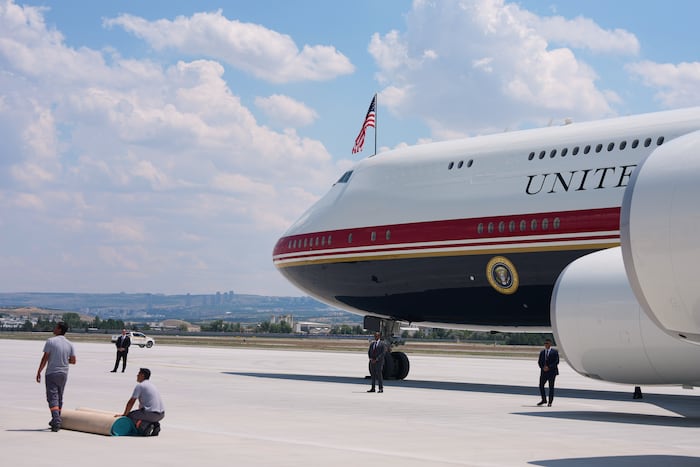
At the heart of this legal battle is the Times’ reporting on the new presidential aircraft, a luxurious jet that was originally a gift from Qatar. The Trump administration invested approximately $400 million to retrofit and upgrade the plane before it entered service. However, the newspaper’s coverage raised serious questions about the aircraft’s security capabilities.
According to the Times’ reporting, which relied on anonymous sources, the Secret Service had urged President Trump to use an older model Air Force One when departing a NATO summit in Turkey the previous week. The sources indicated that the newer Qatari-gifted aircraft allegedly lacked some of the sophisticated security features found in the older planes, including advanced antimissile defense systems.
President Trump responded to the reporting on social media, denying that any security concerns existed with the new aircraft.
Justice Department Defends Its Actions
The Justice Department has maintained that its investigation targets those who leaked classified information, not the journalists themselves. Officials have emphasized several key points in defending the subpoenas:
- Reporters are being treated as material witnesses, not investigation targets
- The focus is on identifying government officials who shared classified national security information
- The department respects the press’s important role while enforcing laws against unauthorized disclosures
- Protecting classified information is essential for national security
Acting Attorney General Todd Blanche addressed the controversy during his Senate confirmation hearing on July 15, 2026. When questioned by Senator Peter Welch, a Vermont Democrat, about the department’s intentions to ask journalists about their sources, Blanche offered a nuanced response.
“No, the question we want to ask them is who provided them with classified national security information, which everybody in this body should want to protect,” Blanche stated during the hearing.
A Pattern of Escalating Pressure on the Press
This confrontation follows a troubling pattern of increased government pressure on news organizations. Earlier in 2026, the FBI conducted a search of a Washington Post reporter’s home and seized her electronic devices as part of a separate leak investigation.
The legal landscape shifted significantly in April 2025 when then-Attorney General Pam Bondi rescinded a protective policy implemented during the Biden administration. That policy had shielded journalists from having their phone records secretly seized during leak investigations. Bondi’s memo restored prosecutors’ authority to use various legal tools, including subpoenas, court orders, and search warrants, to identify government officials making unauthorized disclosures to the press.
While the Justice Department has periodically obtained phone records of individual journalists across different administrations, attempting to force reporters to reveal their sources before a grand jury remains an exceptionally rare and controversial step that strikes at the core of investigative journalism’s ability to function.
The outcome of this legal battle could have far-reaching implications for press freedom in the United States and the ability of journalists to protect confidential sources who expose government misconduct or inform the public about matters of national importance.