

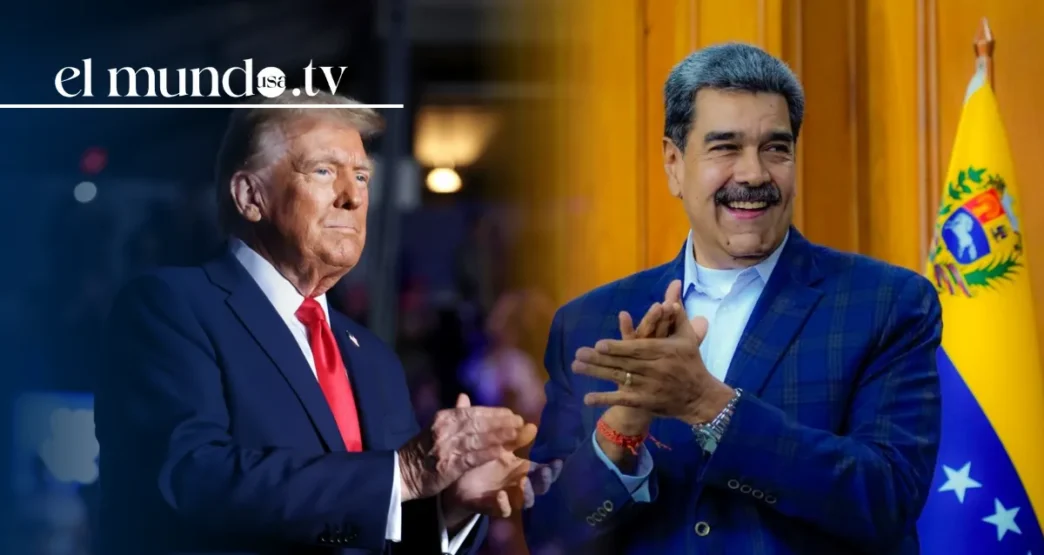
Venezuelan President Nicolás Maduro confirmed on Wednesday that he recently spoke with US President Donald Trump, amid rising bilateral tensions, US military deployment in the Caribbean, and a growing air connectivity crisis affecting the South American country.
The revelation comes at a delicate moment, as Venezuela faces air restrictions, sanctions, and international military operations that are redefining regional security.
Maduro reveals a “cordial” conversation with Trump
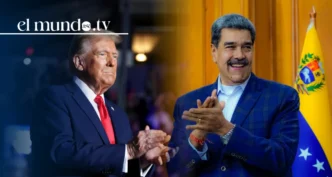
During an official broadcast, Nicolás Maduro said that the phone call took place “about ten days ago”, which would place the conversation around November 23, although he did not specify the exact date. According to the Venezuelan president, the conversation was ‘cordial’ and took place in a “respectful tone”.
The Chavista leader said that the contact came directly from the White House, which communicated with the Miraflores Palace in Caracas. Despite not offering details on the topics discussed, Maduro said he hopes the exchange represents a first step “towards a respectful dialogue” between the two governments, whose diplomatic relations have been broken since 2019.
Trump, for his part, had already confirmed on Sunday that a conversation had taken place, although he also avoided going into detail about its content.
“Diplomatic prudence”: Why Maduro has remained silent until now?
Maduro explained that he did not reveal the dialogue immediately out of “prudence”, recalling his experience as Venezuela’s former foreign minister. He pointed out that certain matters must be kept confidential “until they happen”, suggesting that sensitive issues related to bilateral tensions or the military situation in the region were discussed.
The president insisted that the path between Caracas and Washington must be one “of respect, diplomacy, and dialogue,” reiterating his rejection of the sanctions policy promoted by the United States in recent years.
Trump warns about military operations: “They go much further”
While Maduro spoke of dialogue, Donald Trump adopted a completely different tone. At a press conference, the former US president said that US military operations around Venezuela “go much further” than a pressure campaign against Maduro.
Trump warned that ground operations could be launched, similar to those carried out in international waters against vessels allegedly linked to drug trafficking. These statements raise the level of uncertainty about Washington’s true intentions in the Caribbean.
A report cited by The New York Times noted that the call between Trump and Maduro included US Secretary of State Marco Rubio, though it did not yield concrete plans for a possible meeting.
The Pentagon confirms bombings, leaving 82 dead
According to information from the Pentagon, the United States has carried out 21 bombings against ships in the southern Caribbean and eastern Pacific, alleging links to drug trafficking organizations. These operations have left at least 82 people dead.
This military offensive is part of a deployment that, according to analysts, seeks to put pressure on the Maduro government while Washington maintains accusations against the Venezuelan leader, whom it has accused of leading an alleged criminal organization called the “Cartel of the Suns”.
Air crisis in Venezuela: Cancellations, warnings, and closure of airspace
The situation worsened last Saturday when Trump warned international pilots and airlines to consider Venezuelan airspace “closed” due to what Washington describes as “a potentially dangerous situation”.
The warning prompted an immediate wave of flight cancellations to and from Venezuela, deepening the already severe air connectivity crisis facing the oil-producing nation.
In response, the Venezuelan government revoked the operating licenses of eight international airlines, including Spain’s Iberia, Air Europa, and Plus Ultra, dealing a further blow to passengers and the country’s economic activity.
While the United States accuses Maduro’s government of leading a “terrorist organization,” Caracas insists that Washington is pushing for “regime change” to remove Chavismo from power, which it has held since 1999.