Ukraine faced a turbulent period on July 17, 2026, as the nation grappled with deadly Russian strikes while simultaneously navigating a controversial government reshuffle that has divided the country’s military establishment and sparked widespread public demonstrations across major cities.
President Volodymyr Zelenskyy’s dramatic shake-up of his administration, which included the dismissal of Defense Minister Mykhailo Fedorov and the appointment of a new prime minister, has exposed deep tensions between the Ukrainian military’s traditional leadership and a younger generation of tech-savvy innovators who have championed drone warfare and digital solutions on the battlefield.
Deadly Overnight Attacks Claim Civilian Lives
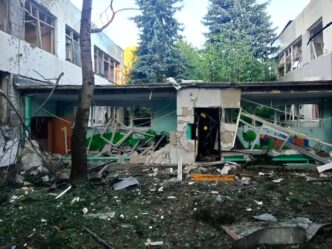
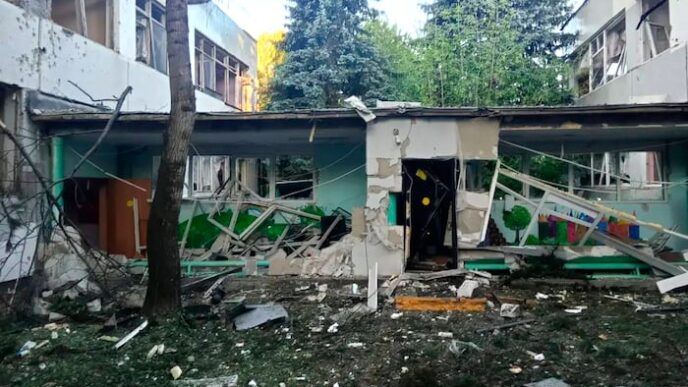
Russian forces launched another wave of devastating attacks on Ukrainian territory, resulting in at least four civilian deaths and leaving 20 others wounded, according to President Zelenskyy. The southern port city of Odesa bore the brunt of the assault, where a missile strike killed two people and injured ten others, including children.
Moscow’s intensified bombing campaign appears to be a direct response to recent battlefield setbacks and Ukraine’s successful targeting of Russian oil facilities, which has caused significant fuel shortages within Russia. The Kremlin has responded with relentless strategic bombing focused primarily on civilian areas throughout Ukraine.
Fedorov’s Dismissal Triggers Nationwide Protests
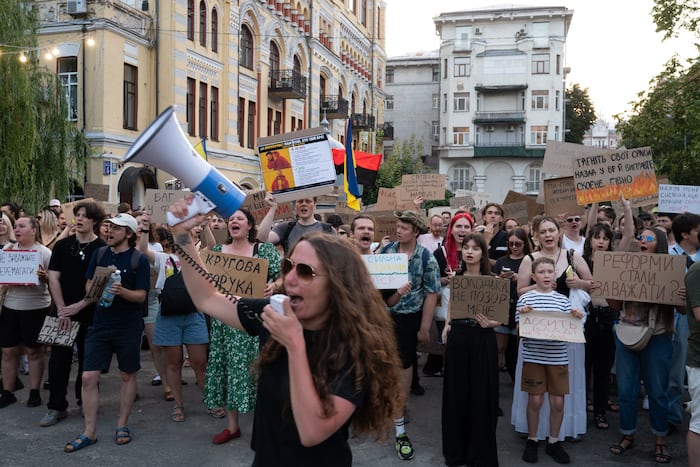
The departure of 35-year-old Fedorov, widely regarded as a digital modernizer who transformed Ukraine’s approach to warfare, drew thousands of protesters to the streets in cities across the nation. Demonstrations continued for a second consecutive day in Kyiv on July 17, 2026, with demonstrators carrying signs reading “Don’t ruin something that works.”
“We transformed Ukraine into a global tech leader and a defense powerhouse,” Fedorov stated on social media, defending his record after just six months in the government position.
Protester Olha Horoshkova, whose father has served in the armed forces since 2022, told reporters that her father has witnessed “noticeable changes” under Fedorov’s leadership. She emphasized that bureaucracy has decreased and conditions have genuinely improved for soldiers on the ground.
Another demonstrator, Yehor Pohrebniak, acknowledged that army chief General Oleksandr Syrskyi has achieved notable triumphs during the war. However, he argued that Syrskyi’s approach to warfare has become outdated in an era of rapid technological evolution, stating that Ukraine needs more technological solutions to succeed.
Special Operations Expert Tapped as Interim Defense Minister
Zelenskyy has nominated Major General Yevhen Khmara, a highly regarded special operations expert who currently serves as acting head of the state’s security service, to assume the defense minister’s duties. Khmara brings an impressive military background to the position:
- Has led the SBU security service since January 2026
- Previously commanded the SBU’s elite Alpha special forces unit
- Architect of Operation Spiderweb, one of Ukraine’s most spectacular attacks on Russian air bases
- Joined the Alpha unit in 2011 and became its commander in 2023
- Promoted to major general in 2024
However, Khmara’s formal appointment faces significant bureaucratic obstacles. Ukrainian law requires the defense minister to be a civilian, meaning any serving military or security officer must leave active duty before being officially confirmed. Additionally, Parliament will be on summer recess through mid-August, potentially delaying any confirmation vote.
Tensions Between Old Guard and Young Innovators
According to Zelenskyy, relations between Fedorov and 60-year-old General Syrskyi, who began his military career in the former Soviet Union, had completely broken down, making Fedorov’s position untenable. This generational clash represents a fundamental disagreement about how Ukraine should fight the more than four-year-old war against Russian invasion.
Fedorov has been credited with advancing Ukraine’s innovative drone technology, which has provided crucial advantages on the battlefield, and fighting corruption within the military establishment. His supporters argue that removing him could undermine the technological progress that has helped Ukraine gain recent traction in the conflict.
The shake-up comes at a particularly sensitive time for Ukraine, which has made significant battlefield gains in recent months. Critics worry that the internal turmoil could prove to be an unwelcome distraction that tests Zelenskyy’s authority and potentially undermines military morale during a critical phase of the ongoing war.