
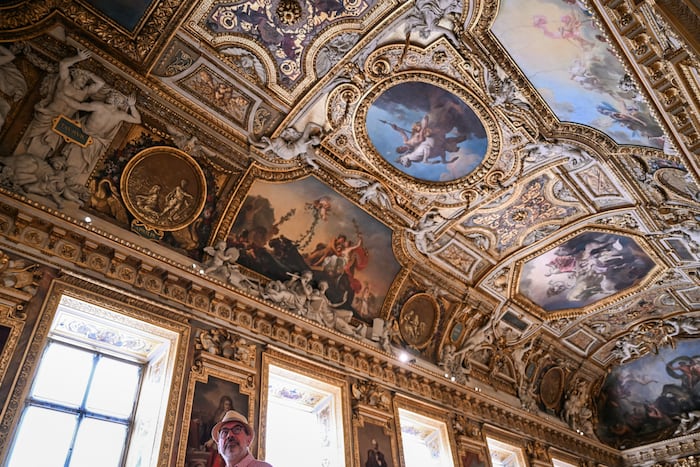
Nine months after one of the most audacious art heists in modern history, the Louvre Museum in Paris has reopened its iconic Apollo Gallery to visitors. However, those expecting to see the legendary French crown jewels will be disappointed – the display cases that once housed the priceless treasures are gone, and the stolen gems remain unrecovered.
On July 22, 2026, the gallery welcomed the public once again, marking a significant moment for the world’s most visited museum as it attempts to move forward from the devastating October 2025 theft that sent shockwaves through the international art community. The brazen daytime robbery saw thieves make off with crown jewels valued at approximately 88 million euros, or $102 million.
A Gallery Transformed: Returning to Historical Roots
Rather than replacing the stolen jewels or leaving empty display cases as a reminder of the theft, museum leadership has decided to return the Apollo Gallery to its original 17th-century ceremonial purpose. Visitors can now admire the room’s stunning architectural features, including its gilded ceilings and magnificent Greek frescoes, as they make their way to see the nearby Mona Lisa.
Christophe Leribault, who was appointed as the Louvre’s director in February 2026 following the resignation of previous director Laurence des Cars, explained the reasoning behind the decision. The gallery’s former exhibits will be relocated to other sections of the museum, he confirmed.
“It’s also an opportunity to rediscover the splendid architecture and decor of this gallery,” Leribault stated, emphasizing the silver lining in what has been a challenging period for the institution.
The change in leadership came after des Cars stepped down following the heist and a series of failures that severely damaged public confidence in the museum’s administration.
The Heist That Shocked the World
The October 2025 theft remains one of the most shocking crimes in recent memory. In less than eight minutes, the perpetrators forced their way through a window into the Apollo Gallery during the weekend and escaped with the invaluable crown jewels. The speed and precision of the operation exposed serious security vulnerabilities at the prestigious institution.
French Culture Minister Catherine Pegard addressed the lasting impact of the crime during the gallery’s reopening ceremony:
“That sinister day, when iconic pieces were taken, cannot be forgotten, and indeed, I believe, should not be. It was a trauma for the entire world, which, for several days, expressed its shock and sadness in every language. It was a trauma for us, discovering the fragility of a place we thought unshakeable, and which, like so many others, proved vulnerable.”
Enhanced Security Measures and Future Plans
In response to the heist, the Louvre has implemented substantial security improvements throughout the facility. These upgrades include:
- Installation of new state-of-the-art surveillance cameras
- Implementation of advanced anti-intrusion systems
- Enhanced monitoring protocols throughout the museum
- Increased security personnel presence
These measures are part of a broader initiative known as the “Louvre New Renaissance” plan, a decade-long project launched in 2025 with an estimated budget of up to 800 million euros ($933 million). The ambitious program aims to modernize the museum’s infrastructure, reduce overcrowding, and create a dedicated gallery for the Mona Lisa by 2031.
An Ongoing Investigation
Despite intensive efforts by French authorities and international law enforcement agencies, the stolen crown jewels remain missing. The investigation continues, but no arrests have been announced, and the whereabouts of the priceless artifacts remain unknown. Art crime experts have speculated that jewels of such historical significance and recognizability would be extremely difficult to sell on the legitimate market, raising concerns they may have been stolen to order for a private collector or broken down for their precious materials.
For the millions of tourists who visit the Louvre each year, the reopening of the Apollo Gallery offers a chance to experience one of the museum’s most beautiful spaces, even if its most famous treasures are no longer present. The gallery stands as both a testament to French cultural heritage and a sobering reminder of how even the most secure institutions can fall victim to determined criminals.