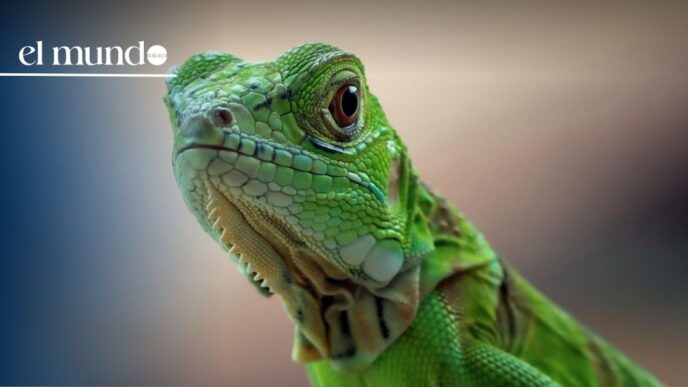
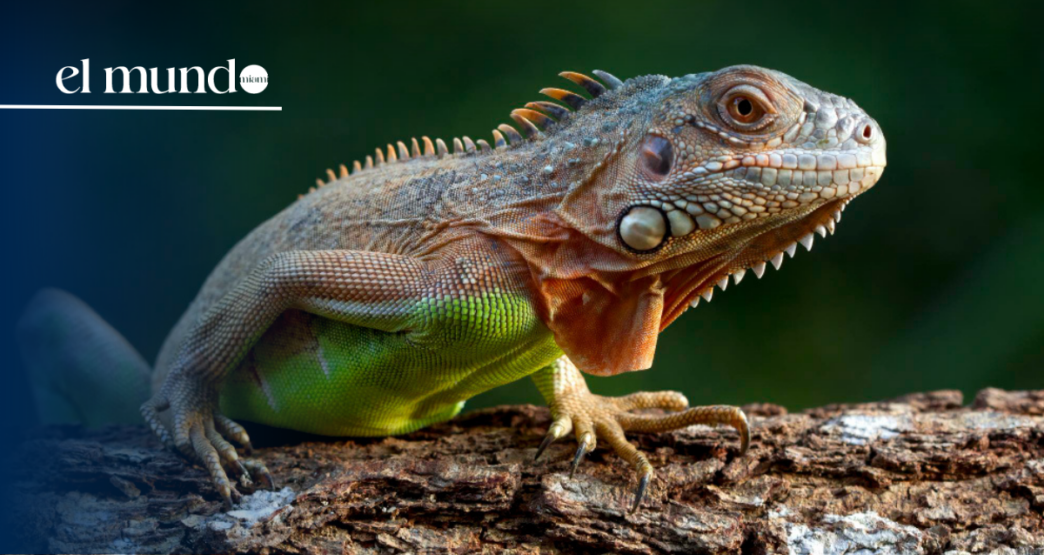
The extreme cold in Florida has turned streets, gardens, and parks into an unusual scene: green iguanas falling from trees, stiff and motionless from the low temperatures. What for many is usually a viral curiosity each winter has now become an official state strategy to combat one of its main invasive species.
In response to this phenomenon, the Florida Fish and Wildlife Conservation Commission (FWC) issued an executive order authorizing the removal of green iguanas without the need for permits, an unprecedented measure in the state’s environmental efforts.
Sigue nuestras cuentas en Facebook e Instagram para mantenerte informado con las noticias más relevantes.
“The Disney life is over”: experts endorse the measure
In an interview with CNN, Ron Magill, a renowned expert at the Miami Zoo, was unequivocal in explaining the authorities’ new approach.
“The Disney life is over for the iguanas”, Magill said, noting that the priority now is to take advantage of the weather conditions to drastically reduce the population of these reptiles.
The order allows any citizen or trained professional to remove iguanas from public and private spaces, provided they adhere to humane guidelines.
The “thawing,” the critical window
The urgency of the measure is explained by the biology of green iguanas, cold-blooded reptiles that lose muscle control when temperatures drop below 4 degrees Celsius.
During these episodes:
- Iguanas enter a state of suspended animation, remaining motionless.
- They fall from the trees, giving the impression that they’re dead, even tho they’re not.
- Once the temperature rises and the sun comes out, they “revive” and regain their mobility and aggressiveness.
Therefore, the authorities consider this moment the best opportunity for a mass elimination.
Read more: New cold front brings a wintry dawn to Miami and South Florida
Million-dollar damages and ecological risk
Green iguanas in Florida are considered a highly destructive invasive species. According to the FWC, they cause:
- Severe damage to gardens, irrigation systems, and roadways.
- Erosion of channels and infrastructure edges.
- Displacement of native species, affecting the ecological balance.
Ron Magill warned that we must not let our guard down, as the window of opportunity is short and the problem could worsen as temperatures rise.
Florida eases rules in response to the environmental emergency
Historically, the management of invasive species in Florida was subject to permits and bureaucratic processes. However, the frequency of cold fronts during the winter of 2026 forced the state to cut red tape in its response.
Now, the priority is clear: eradicate the iguanas before they recolonize gardens, canals, and urban areas, taking advantage of their most vulnerable point.