Miami prepares to take center stage during the FIFA World Cup 2026. City officials and tourism leaders are placing a strong emphasis on infrastructure as a cornerstone of economic readiness.
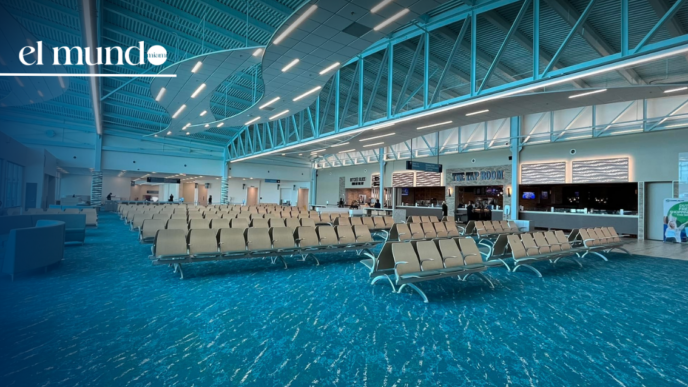
Carolyn Corrigan, a key voice in the city’s planning efforts, said the city is working to reinforce every critical point that will shape the visitor experience. They are starting with Miami International Airport (MIA), one of the busiest gateways to the United States for international travelers.
READ: “Sin tax”: Florida gubernatorial candidate proposes taxing OnlyFans models at 50%
The airport is expected to play a decisive role in managing the influx of fans, media, and business travelers arriving from across the globe. Ensuring operational efficiency at MIA is not only a logistical challenge but also an economic imperative, as smoother arrivals translate into stronger visitor spending across hotels, restaurants, transportation, and entertainment.
Miami strengthens its infrastructure ahead of the World Cup 2026
Ground transportation is another major pillar of the city’s strategy. Hard Rock Stadium, located in Miami Gardens, will be supported by a network of strategic highway corridors, including I-95, I-75, and Florida’s Turnpike, according to Pasillo Turístico.
These routes are part of an ongoing maintenance and operations plan designed to guarantee efficient mobility on match days. Corrigan stressed that the goal is to minimize friction for both tourists and residents, ensuring that the World Cup experience runs seamlessly from arrival to departure.
Miami enters the World Cup 2026 with a clear competitive advantage: a large and diversified hospitality sector. The destination currently offers approximately 66,000 hotel rooms, yet officials are already anticipating record-breaking occupancy levels between June and July 2026.
READ: Ron DeSantis boasts of arresting 20,000 migrants and toughens anti-immigrant policy in Florida
For the travel and hospitality trade, the message is unambiguous. The World Cup will generate a broad-based economic impact that goes far beyond the stadium itself. Hotels, restaurants, attractions, tour operators, and service providers across South Florida stand to benefit.
What does I have to know?
One recommendation is early planning. Booking hotel accommodations will be essential, but it will not be enough to fully secure a smooth experience.
The general guideline is to plan three to four months ahead for restaurant reservations, cultural experiences, and major attractions. Iconic sites such as Vizcaya Museum and Gardens, Superblue, and other landmark cultural spaces could be difficult to access without prior bookings.
From an economic standpoint, Miami’s World Cup strategy underscores a clear objective: leverage infrastructure, tourism, and culture to deliver lasting economic gains well beyond 2026.