Catastrophic flash flooding swept through West Virginia on July 22, 2026, prompting Governor Patrick Morrisey to deploy 100 National Guard members to the hardest-hit northern regions of the state. The governor declared a state of emergency for all 55 counties as torrential rains inundated homes, businesses, and critical infrastructure across the Mountain State.
Unprecedented Rainfall Triggers Emergency Response
Weather forecasters reported that some areas received up to 7 inches of rain, creating life-threatening conditions that forced emergency crews to conduct dozens of water rescues throughout the night. An additional 200 National Guard members were expected to arrive by late Wednesday morning to assist with ongoing relief efforts and rescue operations.
“State and local agencies will remain on the ground for as long as it takes to help affected communities,” Governor Morrisey stated in an official announcement.
The National Weather Service in Charleston issued urgent warnings on Tuesday night, telling residents in affected communities to “SEEK HIGHER GROUND NOW!” as floodwaters rose rapidly throughout the region. Fortunately, no deaths were immediately reported despite the severity of the flooding.
Widespread Destruction Across Multiple Counties
The devastation was particularly severe in Lewis and Upshur counties, which have a combined population of approximately 40,000 residents. Emergency service communication channels remained active throughout Tuesday night as first responders worked tirelessly to rescue stranded individuals from rising waters.
Lewis County Commissioner Agnes Quinn Queen described the scope of the disaster in stark terms, posting on social media that “the devastation across our county is extensive.” First responders conducted water rescues for hours from Tuesday night into Wednesday morning, pulling people from submerged vehicles and flooded structures.
The flooding caused significant damage to infrastructure and businesses across the state, including:
- Multiple bridges washed out by raging floodwaters
- Closure of portions of Interstate 79 and U.S. Route 48
- Numerous secondary roads rendered impassable
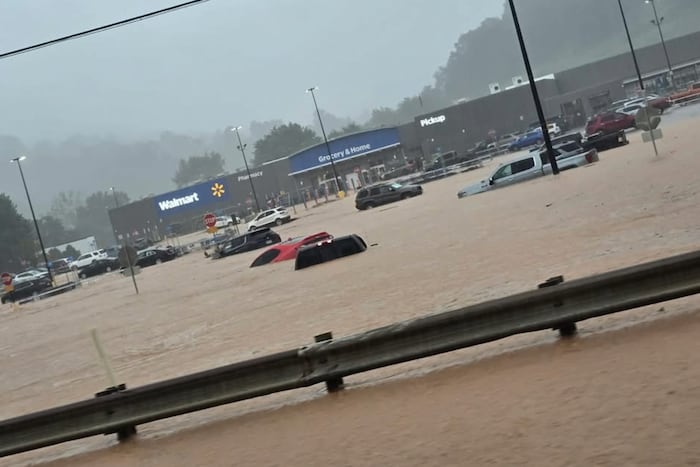
- A Walmart store in Weston inundated with muddy water that surged deep into the building
- A sinkhole in Fayetteville that swallowed a vehicle at a local bar
- Possible tornado damage reported in the St. Marys and Belmont areas
Residents Shelter in Place as Conditions Remain Hazardous
Many residents chose to shelter in place rather than attempt to navigate the dangerous flood conditions. Bob Pfister, a guest at a hotel in Weston, reported that while the first floor of the building was completely inundated, power remained on and most guests decided to wait until Wednesday morning before attempting to leave.
“Right now this option is much better than a shelter and a life boat,” Pfister posted on Facebook. “If the power goes out that may change a whole lot!”
Social media was flooded with dramatic video footage and photographs showing vehicles completely submerged in parking lots and businesses filled with muddy floodwater. Emergency crews reported that some rescuers were unable to reach certain locations where floodwaters had completely cut off access, leaving some residents stranded for extended periods.
Historic Context and Regional Impact
The flooding occurred exactly a decade after a similar disaster claimed 23 lives when heavy rains fell for hours over the same areas. Data from a U.S. Geological Survey water gauge showed that Sand Run, a creek tributary near Buckhannon, rose to record levels, surpassing the mark set during a devastating November 1985 flood event that resulted in 47 deaths statewide.
The ground was already saturated before the storm arrived, as previous storms had dumped more than 2 inches of rain throughout the state on Saturday, leaving the soil unable to absorb additional precipitation.
The severe weather system that struck West Virginia was part of a larger storm pattern that stretched from the Cincinnati area across New Jersey to the New York City suburbs. Reports of tornadoes accompanied the heavy rainfall throughout the region, and flash flood warnings were also issued for parts of neighboring Virginia as the system moved through the area.
Governor Morrisey urged all residents to remain at home and avoid unnecessary travel as conditions continued to be hazardous. Flash flood warnings in West Virginia expired by Wednesday morning, but officials cautioned that cleanup and recovery efforts would take considerable time given the extensive damage throughout the region.