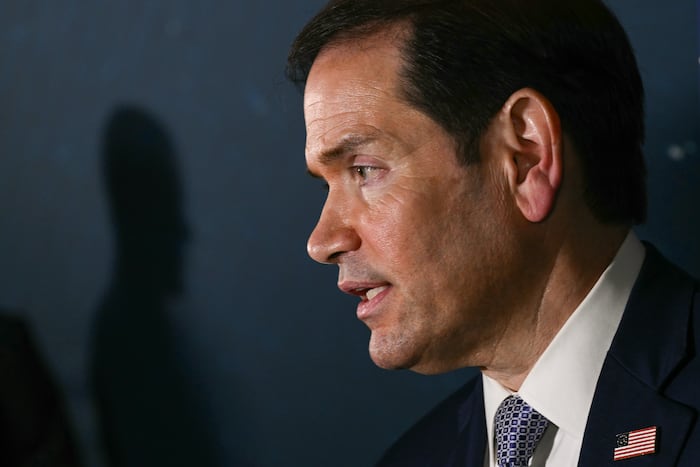
The Trump administration stands on the verge of signing a landmark nuclear agreement with Saudi Arabia that could fundamentally reshape the geopolitical landscape of the Middle East. Secretary of State Marco Rubio, speaking from the Philippines on July 22, 2026, moved swiftly to address mounting concerns about the deal’s potential implications for nuclear proliferation in one of the world’s most volatile regions.
The anticipated agreement, which sources familiar with the matter confirmed to The Associated Press, could pave the way for Saudi Arabia to develop uranium enrichment capabilities for its civilian nuclear program. This represents a significant shift in American foreign policy and has already sparked debate among nonproliferation experts and lawmakers alike.
Rubio Addresses Proliferation Fears Head-On
As criticism began to mount regarding the potential risks of helping Saudi Arabia fulfill its long-held ambition to enrich its own uranium, Secretary Rubio offered a firm defense of the administration’s position. The Florida native, who has become a key architect of Trump’s foreign policy agenda, dismissed suggestions that the deal could trigger a nuclear arms race in the Middle East.
“The U.S. is not going to reach any agreement with any country in the world that leads to the risk of proliferation.”
However, international observers have noted that the agreement reportedly will not include the International Atomic Energy Agency’s Additional Protocol, which provides for enhanced monitoring, inspections, and verification measures. This omission has raised eyebrows among nuclear security experts who view such safeguards as essential to preventing the diversion of nuclear materials toward weapons development.
A Revolutionary Approach to Nuclear Policy
Alexander Bollfrass, a respected nuclear expert at the International Institute for Strategic Studies in London, characterized the impending deal as nothing short of groundbreaking in its departure from established nonproliferation norms.
The expert pointed out that what makes this agreement particularly significant is that the United States appears willing to transfer highly sensitive nuclear technology without requiring Saudi Arabia to adhere to the highest available international safeguards. This represents a dramatic departure from traditional American nuclear diplomacy.
Key aspects of the reported agreement include:
- A 30-year duration for the nuclear cooperation framework
- Involvement of U.S. firms in developing Saudi Arabia’s nuclear program
- Potential construction of a uranium enrichment facility following a joint study
- Congressional review process that could face significant opposition
- Absence of the IAEA’s Additional Protocol for enhanced oversight
Regional Tensions and Strategic Implications
The timing of this nuclear agreement is particularly noteworthy, coming amid ongoing military operations by the United States and Israel against Iran. These operations have been aimed, in part, at eliminating Tehran’s ability to develop nuclear weapons. Iran has consistently maintained that its nuclear enrichment activities are intended solely for peaceful purposes.
Nonproliferation specialists have long warned that any centrifuge operations within Saudi Arabia could potentially open the door to a weapons program. Crown Prince Mohammed bin Salman, the kingdom’s assertive de facto leader, has previously suggested that Saudi Arabia might pursue nuclear weapons if Iran successfully develops an atomic bomb.
Adding another layer of complexity to the regional dynamics, Saudi Arabia and nuclear-armed Pakistan recently signed a mutual defense pact following Israeli military action against Hamas officials in Qatar. Pakistan’s defense minister subsequently declared that his nation’s nuclear capabilities would be made available to Saudi Arabia if necessary, a statement widely interpreted as a warning directed at Israel, which is believed to be the only nuclear-armed state in the Middle East.
Congressional Review and Domestic Politics
The agreement is expected to face scrutiny when submitted to Congress for review, where it could encounter opposition from lawmakers concerned about nuclear proliferation risks and the strategic implications of empowering Saudi Arabia with enrichment capabilities.
Both President Trump and his predecessor, Joe Biden, had previously attempted to negotiate nuclear cooperation agreements with the Saudi kingdom to share American technology. The current deal represents the culmination of years of diplomatic efforts and could reshape American influence in the region for decades to come.
Energy Secretary Chris Wright had traveled to Saudi Arabia prior to Trump’s visit to the kingdom, where he discussed the development of Saudi Arabia’s commercial nuclear power industry with his Saudi counterpart. The Department of Energy has not yet issued any official statement regarding the impending agreement.
For comparison, the United Arab Emirates, Saudi Arabia’s neighbor, previously signed what is known as a “123 agreement” with the United States to construct its Barakah nuclear power plant with South Korean assistance. That agreement included stricter nonproliferation commitments that the current Saudi deal reportedly lacks.