State health inspectors ordered seven South Florida restaurants to temporarily close their doors during the week of July 13-20, 2026, after discovering alarming conditions ranging from moldy pork chops to fly-contaminated chicken and severe pest infestations. The shuttered establishments span across North Miami Beach, Oakland Park, Sunrise, North Lauderdale, Pompano Beach, and Cutler Bay.
The violations documented by Florida’s Division of Hotels and Restaurants paint a disturbing picture of food safety failures that put countless diners at risk. Among the most serious findings were food items with visible mold growth, rodent droppings in food preparation areas, live roach activity throughout kitchens, and one establishment that was operating without running water.
Severe Pest Infestations Lead the List of Violations
The inspection reports reveal that pest control failures were among the most common and concerning issues found across the shuttered restaurants. At Andreas Cafeteria and Coffee Shop, located at 16679 NE 19th Avenue in North Miami Beach, inspectors discovered more than 20 rodent droppings on the floor behind the front counter’s hand washing sink during their July 13 inspection. The establishment accumulated 11 violations in total, including dead roaches near the bathroom entrance and heavily soiled floors throughout the facility.
“Rodent activity present as evidenced by rodent droppings found. Observed 20+ rodent droppings on the floor at the front counter behind hand washing sink,” the inspection report stated for Andreas Cafeteria.
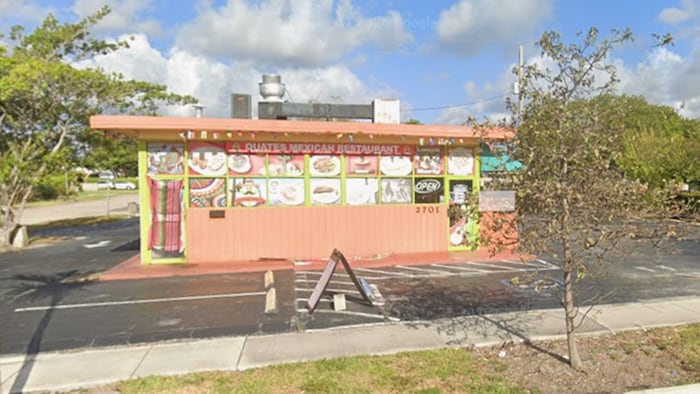
Perhaps the most shocking conditions were discovered at Quates Mexican Restaurant at 3701 North Andrews Avenue in Oakland Park, which was ordered closed on July 16 with 14 violations. Inspectors found a staggering number of roaches throughout the establishment, including live roaches inside the gasket of a cook line cooler, behind wall-mounted equipment, and inside the dish machine’s control panel. Dead roaches were found in nearly every area of the kitchen, including inside the walk-in cooler and reach-in refrigerators.
Food Temperature Abuse and Contamination Issues
Beyond pest problems, several restaurants failed to maintain proper food temperatures, creating dangerous conditions for bacterial growth. At Quates Mexican Restaurant, inspectors issued stop-sale orders on multiple items being held at unsafe temperatures:
- Cooked beef stored at 47 degrees Fahrenheit
- Cooked rice at 49 degrees Fahrenheit
- Refried beans at 48 degrees Fahrenheit
- Raw chicken at 47 degrees Fahrenheit
- Cooked pork with visible mold-like growth
According to food safety standards, cold items must be maintained at 41 degrees Fahrenheit or below to prevent bacterial growth. Hot foods must be kept at 135 degrees or above. The violations at these establishments significantly exceeded these safety thresholds, with operators admitting some items had been stored overnight at dangerous temperatures.
Additional violations across the seven restaurants included mold-like buildup inside ice machines, unsanitary kitchen conditions with accumulated grease and food debris, and cutting boards with deep cut marks that could no longer be properly sanitized. Several establishments also had issues with expired employee training certifications and food manager certifications that had lapsed.
All Restaurants Have Since Reopened
The good news for the communities affected is that all seven restaurants have since completed the required cleanup procedures and passed follow-up inspections. Florida law requires establishments ordered closed for health violations to address all issues and receive clearance from inspectors before resuming operations.
It is worth noting that no restaurants in the Florida Keys were ordered shut during the same inspection period, suggesting that the concentration of violations in the mainland South Florida communities may warrant increased scrutiny from health officials.
Diners concerned about restaurant safety can check inspection reports through the Florida Department of Business and Professional Regulation’s website, which maintains public records of all restaurant inspections conducted throughout the state. Health experts recommend checking these reports before dining at unfamiliar establishments, particularly those in areas with recurring violation patterns.
The July 2026 closures serve as a stark reminder of the importance of regular health inspections in protecting public safety and the serious consequences restaurants face when they fail to maintain proper sanitation standards.